Can Iran’s Regime Survive the War Against Israel and USA?
🌍 Can Iran’s Regime Survive the War Against Israel and USA?
The escalating confrontation involving the Islamic Republic of Iran, the United States, and Israel has triggered one of the most serious geopolitical crises in recent years. With missile exchanges, regional proxy tensions, and economic shockwaves spreading across global markets, one central question dominates political debate:
Can Iran’s regime survive this war?
To answer that, we must examine military capacity, internal stability, economic pressure, strategic leverage, and international dynamics.
🔥 1. Military Strength vs. Strategic Reality
Iran has invested heavily in asymmetric warfare strategies. Through the Islamic Revolutionary Guard Corps (IRGC), Tehran developed advanced missile systems, drone fleets, and regional alliances.
Unlike conventional wars of the past, this conflict is defined by:
- Proxy networks across the Middle East
- Missile and drone warfare
- Cyber operations
- Strategic deterrence tactics
While Iran may not match the combined conventional military strength of the United States and Israel, it possesses the ability to prolong conflict and raise its cost significantly.
The question is not whether Iran can defeat both powers militarily — but whether it can endure sustained pressure long enough to maintain regime control.
💰 2. Economic Pressure and Sanctions
Iran’s economy has already been strained for years under international sanctions. A full-scale regional conflict increases:
- Oil export disruptions
- Currency volatility
- Inflation and unemployment
- Foreign investment collapse
However, Iran has adapted over time by strengthening ties with non-Western powers and developing informal trade networks. Survival may depend on how effectively Tehran can maintain revenue streams while preventing domestic economic collapse.
Economic endurance could become the defining factor in regime survival.
🛳️ 3. The Strategic Leverage of the Strait of Hormuz
One of Iran’s most significant strategic cards — and a key factor that could influence global responses — is the Strait of Hormuz.
The Strait of Hormuz is a narrow waterway connecting the Persian Gulf to the Gulf of Oman and the Arabian Sea. Roughly 20% of the world’s crude oil and LNG exports pass through it, making it one of the most critical chokepoints for global energy supplies. :contentReference[oaicite:0]{index=0}
In the current conflict, shipping traffic has already declined sharply — tankers are avoiding the area amid threats and attacks, and some reports indicate that Tehran’s Revolutionary Guards have effectively restricted vessel movement through the strait. :contentReference[oaicite:1]{index=1}
📈 Global Economic Impact
If the strait were to be fully closed or effectively blocked, the consequences would be severe:
- Oil prices could spike sharply, potentially breaking past $100 per barrel — a price level that would strain inflation-sensitive economies worldwide. :contentReference[oaicite:2]{index=2}
- Freight and insurance costs would surge, disrupting broader global trade beyond just energy markets. :contentReference[oaicite:3]{index=3}
- Asian economies, heavily dependent on Middle Eastern oil (such as India, China, and Japan), would face steeper energy bills and possible slower growth. :contentReference[oaicite:4]{index=4}
- A prolonged disruption could squeeze both oil and gas markets simultaneously, squeezing supply and potentially slowing global economic growth. :contentReference[oaicite:5]{index=5}
This strategic leverage gives Iran a form of “economic pressure” against the United States and its allies — because any sustained closure threatens a global energy shock. At the same time, such an escalation risks deepening economic pain both inside and outside Iran.
🧠 4. Internal Political Stability
The most critical factor may not be missiles or markets — but internal cohesion.
Historically, external conflict can either:
- Rally national unity around leadership
- Or accelerate public dissatisfaction
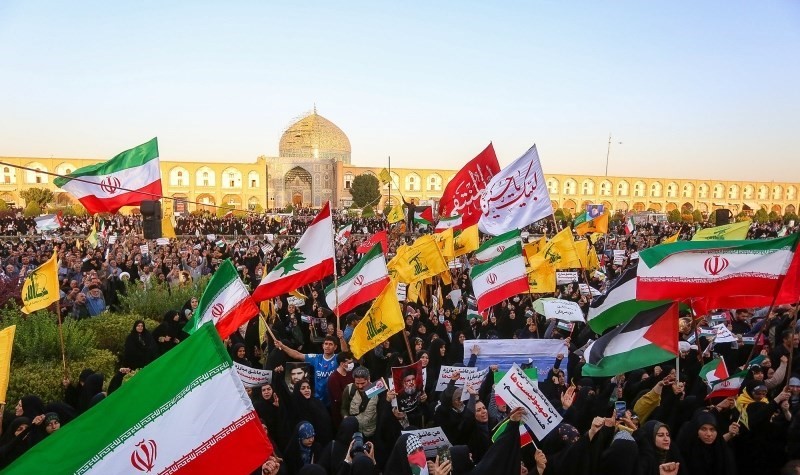
Iran has experienced waves of domestic protests in recent years. If wartime hardship deepens economic struggles, internal unrest could intensify. Conversely, leadership may use nationalist rhetoric to consolidate support.
Regime survival ultimately depends on whether the population perceives the war as defensive resistance or unnecessary escalation.
🌎 5. International Diplomacy and Global Balance
Major powers such as China and Russia play an indirect role in shaping the conflict’s outcome. Diplomatic intervention, ceasefire negotiations, or strategic backing could prevent full regime destabilization.
At the same time, prolonged war risks:
- Regional spillover
- Energy market crises
- Broader global confrontation
Global stakeholders have strong incentives to avoid total collapse of Iran’s state structure, as instability could create a vacuum with unpredictable consequences.
⚖️ 6. Possible Scenarios
Several potential outcomes exist:
Scenario A: Controlled Escalation
Limited conflict followed by diplomatic settlement. Regime survives but weakened economically.
Scenario B: Prolonged Attrition
Extended war drains resources but leadership maintains control through security forces.
Scenario C: Internal Fracture
Economic collapse and sustained unrest trigger political restructuring or leadership change.
Each scenario depends on the duration of conflict and internal resilience.
📊 Final Analysis: Survival Is About Stability, Not Victory
The survival of Iran’s regime is less about battlefield “winning” and more about maintaining internal control under pressure.
History shows that governments often endure external wars if internal institutions remain loyal and organized. However, prolonged economic hardship combined with social unrest presents the greatest risk.
Strategic moves like exploiting the Strait of Hormuz give Tehran a form of leverage in a broader geopolitical standoff — but they also raise the stakes for global markets and could accelerate pressure on both Iran and its adversaries.
The coming months will determine whether this conflict becomes a temporary crisis — or a turning point in regional and global history.